
What attractions can you experience along the Silk Road?
The Silk Road was one of the most important trade networks in human history, linking ancient China with Central Asia, the Middle East, and Europe for over two millennia. Traveling along this legendary route today allows visitors to step into a world where civilizations, religions, and cultures once met and flourished.
Within China, the Silk Road stretches across regions such as Shaanxi, Gansu, Qinghai, Ningxia, and Xinjiang. Along the way, travelers can explore remarkable historical sites including the Terracotta Warriors in Xi’an, the Mogao Caves in Dunhuang, the Jiayuguan Pass of the Great Wall, and the ancient ruins of Gaochang. In addition to cultural heritage, the journey also reveals breathtaking landscapes—from vast deserts and grasslands to snow-capped mountains—making a Silk Road tour both educational and visually rewarding.
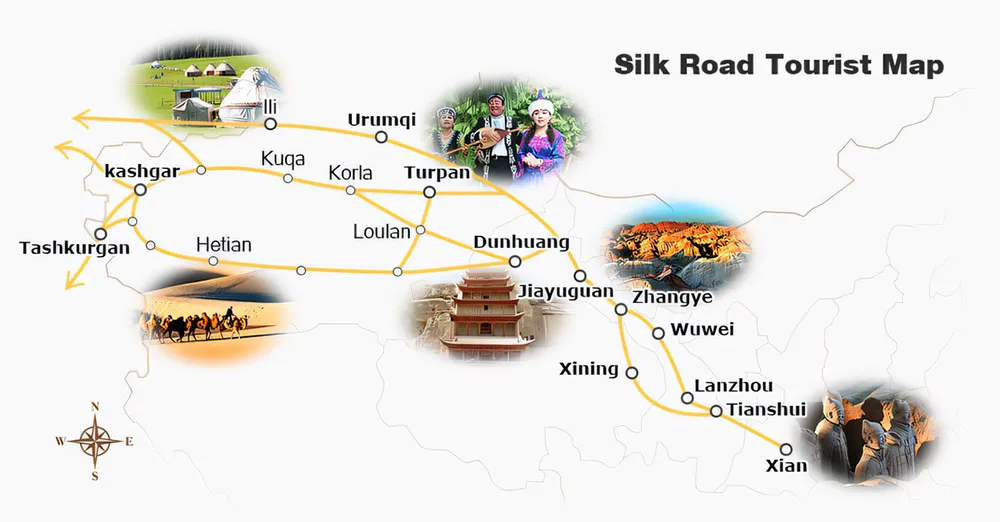
How do travelers get around during a Silk Road tour?
In ancient times, camels were the primary means of transportation along the Silk Road, earning the nickname “Ships of the Desert.” Today, modern transportation has made traveling this route far more comfortable and accessible.
Flights are the most time-efficient option for covering long distances between major Silk Road cities such as Xi’an, Dunhuang, and Urumqi. Trains, on the other hand, offer a more economical choice and allow travelers to enjoy scenic views along the way, although journeys can be lengthy. Depending on your schedule and travel preferences, a combination of flights and train rides is often the most practical way to explore the Silk Road efficiently.
When is the best time to visit the Silk Road?
In general, the ideal time for a Silk Road tour falls between May and October, when weather conditions are most favorable across most regions. However, climate variations mean that the best visiting season may differ from city to city.
Spring and autumn are particularly pleasant in Xi’an, offering mild temperatures and clear skies. Summer is an excellent time to visit cities like Xining, known for its cool climate and expansive grasslands in full bloom. In Xinjiang, late summer to early autumn is especially attractive, as temperatures become more comfortable and local fruits reach their peak harvest season. During this period, travelers may also encounter traditional festivals that provide deeper insight into local cultures and customs.
Flights are the most time-efficient option for covering long distances between major Silk Road cities such as Xi’an, Dunhuang, and Urumqi. Trains, on the other hand, offer a more economical choice and allow travelers to enjoy scenic views along the way, although journeys can be lengthy. Depending on your schedule and travel preferences, a combination of flights and train rides is often the most practical way to explore the Silk Road efficiently.