
Li Shimin (598–649), later known as Emperor Taizong of the Tang Dynasty, was one of the most influential rulers in Chinese history. A brilliant military strategist, capable statesman, and accomplished calligrapher, he played a decisive role in founding the Tang Dynasty and guiding it into one of its most prosperous eras—the Zhenguan Reign.
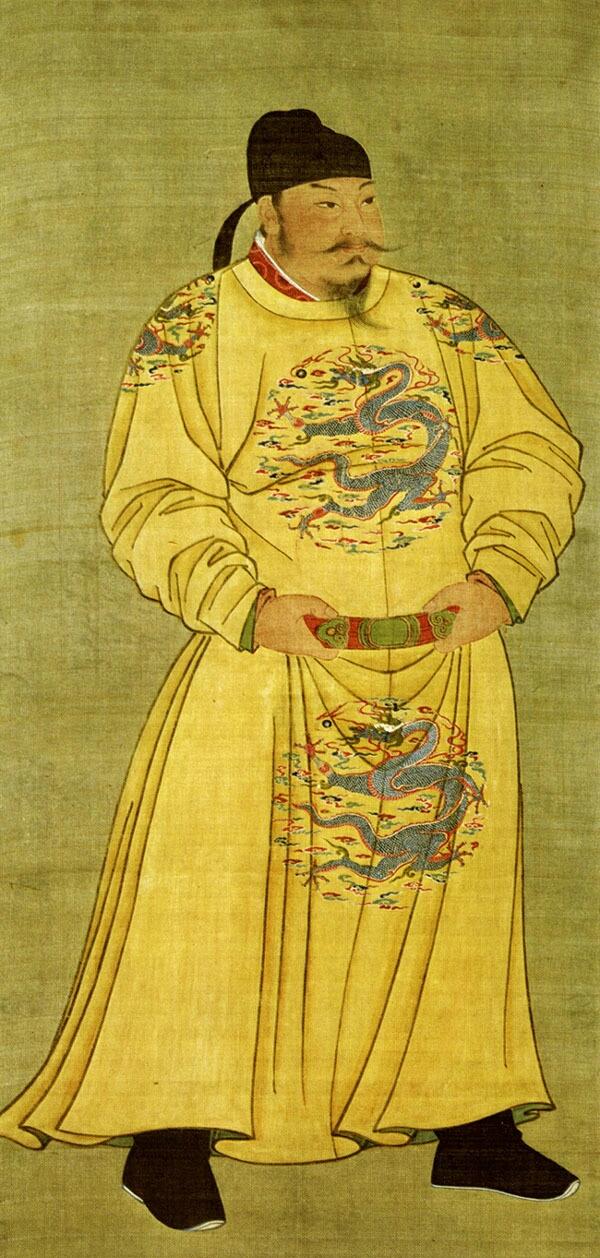
Early Life and Rise to Prominence
Born in 598 in Wugong County (modern Shaanxi Province), Li Shimin was the second son of Li Yuan, a senior official of the Sui Dynasty. From an early age, he displayed exceptional courage and political insight.
At just sixteen, Li Shimin volunteered to lead a rescue mission during a Tujue siege of Emperor Yang of Sui, earning widespread recognition. As the Sui Dynasty weakened, he actively supported his father’s rebellion, which eventually led to the capture of Chang’an (today’s Xi’an) and the establishment of the Tang Dynasty in 618.
Military Campaigns and the Xuanwu Gate Incident
As Prince of Qin, Li Shimin commanded numerous military campaigns that eliminated rival warlords and unified much of China. His victories against figures such as Wang Shichong and Dou Jiande laid the foundation for Tang territorial expansion.
However, internal rivalry culminated in the Xuanwu Gate Incident (626), a decisive and controversial power struggle in which Li Shimin eliminated his brothers. Shortly afterward, his father abdicated, and Li Shimin ascended the throne as Emperor Taizong.
Governance and the Zhenguan Reign
Emperor Taizong ruled with a rare combination of authority and humility. Learning from the failures of the Sui Dynasty, he emphasized:
- Rule of law, including the promulgation of Da Tang Lv
- Merit-based governance, refining the imperial examination system
- Open criticism, famously accepting over 200 corrections from Chancellor Wei Zheng
Under his leadership, agriculture recovered, taxes were stabilized, and society entered a period of peace and prosperity remembered as the Zhenguan Reign—often regarded as a model of good governance in Chinese history.
Foreign Policy and Cultural Achievements
Taizong’s military success extended beyond China’s borders. He defeated the Eastern Tujue, expanded Tang influence across Central Asia, and earned the title “Heavenly Khan.”
Culturally, he was a patron of literature, history, and calligraphy. His writings, including Di Fan and Zhen Guan Zheng Yao, became essential references for later rulers in China and neighboring states.
Succession and Death
In his later years, concerns over succession resurfaced. Determined to avoid another violent power struggle, Taizong ultimately named his son Li Zhi, who later ruled as Emperor Gaozong.
Emperor Taizong died in 649 and was buried at Zhaoling Mausoleum, one of the most significant imperial tombs of the Tang Dynasty.
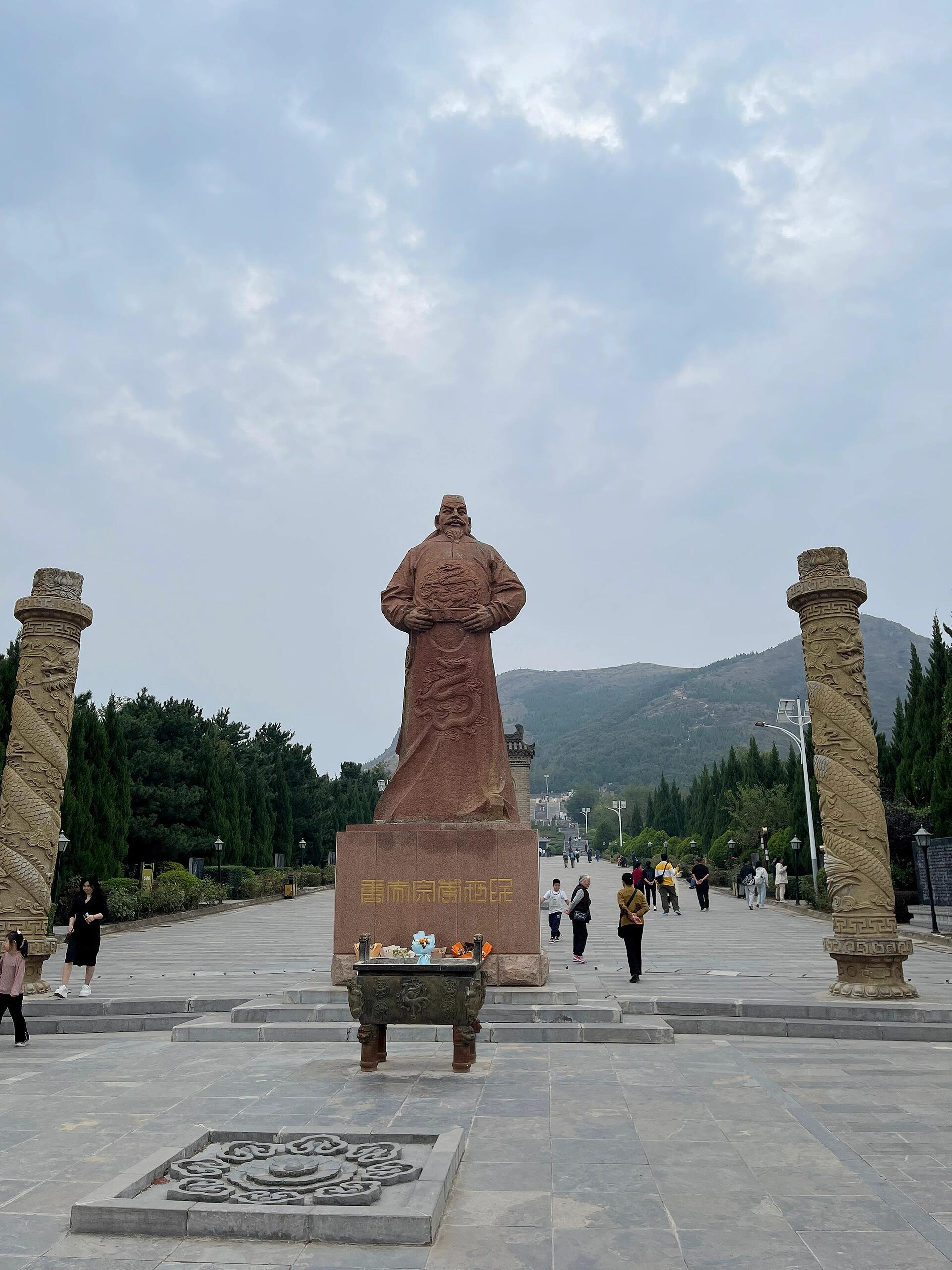
Tomb of Emperor Taizong

Historical Legacy
Li Shimin is remembered not only as a conqueror, but as a ruler who combined strength with restraint. His reign laid the institutional and cultural foundations for the Tang Dynasty’s long-lasting prosperity and influence across East Asia.